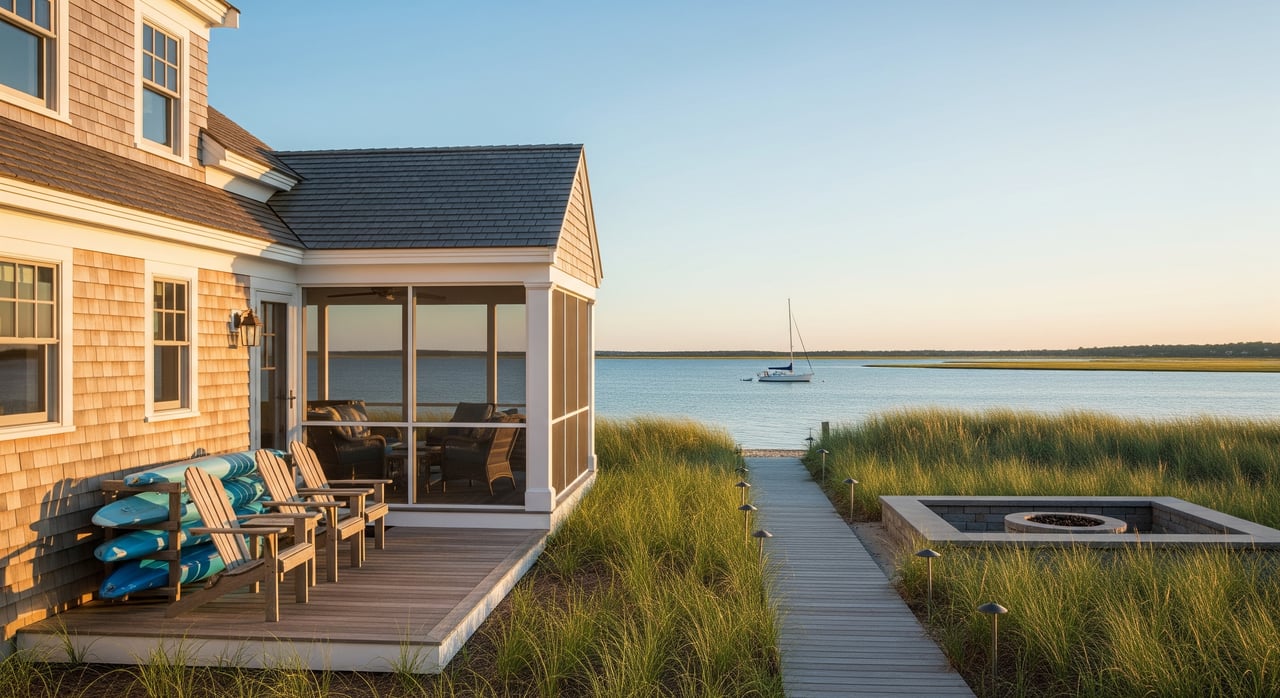
Relocating To Harwich: A Second-Home Owner’s Checklist
Thinking about making Harwich your Cape Cod home away from home? You are not alone. Second-home owners love Harwich for its village charm, beaches, and easy access to the rest of the Cape. Still, owning from a distance brings unique logistics. This checklist walks you through what to set up, who to call, and how to protect your investment so you can relax the moment you arrive. Let’s dive in.
Before closing, confirm who provides each utility and what must transfer into your name. Electricity on the Cape typically runs through Eversource. Start the account transfer and final meter read request early to avoid a gap in service. You can learn more and set up service through Eversource.
Harwich has town water in many areas, but some properties use private wells. Ask the seller which you have and request recent testing if the home is on a well. For town water accounts or meter details, visit the Town of Harwich website and navigate to the Water Department.
Natural gas access is limited in many Cape neighborhoods. Many Harwich homes use heating oil, propane, or electric heat pumps. Confirm your fuel type and set up delivery with a local supplier. If you have a heat pump or electric heat, schedule seasonal service before your first winter.
Much of Harwich relies on private septic systems. Ask for the most recent Title 5 inspection report and the service history. If the property is on town sewer, confirm account setup with the Town.
Set up USPS mail forwarding for your Cape address. If you will be away for months at a time, consider a local contact or mail service for package acceptance. Update your address with your mortgage and insurance carriers and confirm where local tax bills should be mailed with the Town Assessor.
Work with your insurance agent to secure homeowner coverage appropriate for a second home. Ask whether you need flood insurance or wind coverage based on your property’s location. Many coastal parcels fall within mapped flood zones. You can check your parcel’s flood zone using FEMA Flood Maps.
If you plan to rent the property seasonally, confirm your policy covers short-term rental use and liability.
Coverage varies street by street. Xfinity and Verizon are common wired options in many Harwich neighborhoods. Some rural areas benefit from fixed wireless or satellite. If you work remotely, consider a high-speed plan with a backup such as an LTE or 5G hotspot.
Harwich uses a transfer station sticker and fee system. Review accepted materials, sticker rules, and seasonal hours through the Department of Public Works. Plan for bulky-item disposal ahead of time, especially during peak summer weeks.
Add these to your phone and share the list with a trusted local contact:
If you will leave the home unoccupied through winter, plan a full winterization. Drain plumbing lines and add antifreeze to traps as recommended by your plumber. Shut exterior water, set the thermostat to a safe temperature, and use a smart thermostat for remote monitoring. Arrange biweekly or monthly walk-throughs with a caretaker to check for leaks or heat issues.
Schedule an annual heating system tune-up before the cold sets in. If you have a wood or oil system with a chimney, book an inspection and sweep. Use a local vendor familiar with Cape conditions and seasonal homes.
Locate and label the main water shutoff so a caretaker can reach it quickly. If you rely on a sump pump or any critical pump, confirm you have backup power and alarms for outages. Follow pump-out guidance from your septic professional and keep records for your files.
Plan fall clean-up and gutter service. Book snow removal early since local crews fill up quickly. If your home is near the shore or a dune, monitor erosion and consult local authorities before any mitigation. The Cape Cod Commission offers regional guidance on coastal resources.
Install smart locks, cameras, temperature sensors, and leak detectors that send alerts to your phone. Provide emergency access codes and written permission for a local contact or property manager to enter if needed.
Harwich issues seasonal parking passes for town beaches. Fees, residency rules, and guest options change by year. Review current policies on the Town of Harwich site before peak season so you can secure the right pass.
Moorings and harbor rules are managed by the Harwich Harbormaster. Many mooring fields have waitlists, so register early if you plan to keep a boat locally. Review Massachusetts boat registration requirements through Mass.gov.
Shellfish permits and harvest rules are set locally. Check permit requirements and open areas with the Town. Seasonal closures and eelgrass protections can apply.
Most building, electrical, plumbing, and septic work requires permits and inspections. Confirm timelines with the Town’s Building Department and Health Department. For state septic regulations, review MassDEP Title 5 guidance.
If you plan to rent, confirm local registration and safety requirements with the Town Clerk or Health Department. Massachusetts imposes lodging taxes on short-term rentals. Start with the Town of Harwich for the latest local steps, then review state requirements on Mass.gov.
Cape Cod Hospital in Hyannis serves the region and is part of Cape Cod Healthcare. For hospital details and nearby services, visit Cape Cod Hospital. Save local ambulance, police, and fire numbers in your phone.
Harwich Port and nearby villages offer grocery options and seasonal markets. Larger chains and big-box stores are in Hyannis. Expect seasonal schedules from Memorial Day through Labor Day, when service providers and traffic patterns change.
Barnstable Municipal Airport in Hyannis offers regional flights, while Boston Logan is the main hub for national and international travel. The Cape Cod Regional Transit Authority runs bus routes across the Cape. Ferry services to the islands operate year-round or seasonally depending on the route.
Every parcel is different when it comes to storm and flood exposure. Check your risk with FEMA Flood Maps and consult the Cape Cod Commission for regional coastal information. Engage the Town’s Conservation Commission before any shoreline or wetlands work.
Use this roadmap to reduce stress and make your first season smooth.
After offer acceptance
At closing and first week
Within 30 to 60 days
Before your first winter
Coordinating from afar is easier when you have a trusted local team. A concierge-style coordinator can schedule utility turn-ons, meet vendors, arrange fuel delivery, and set up your first-season maintenance plan. They can also help register for beach stickers, coordinate mooring waitlist applications, and put emergency protocols in place.
If you want hands-on help with second-home logistics in Harwich, reach out to Team Franklin. You will get practical guidance, local introductions, and a clear plan for a seamless first season.


Get assistance in determining current property value, crafting a competitive offer, writing and negotiating a contract, and much more. Contact us today.