Barnstable Or Falmouth? Comparing Markets For Cape Buyers
Trying to choose between Barnstable and Falmouth? You are not alone. Many Cape Cod buyers narrow their search to these two towns because both offer strong lifestyle appeal, established housing stock, and access to some of the most recognizable parts of the Cape. The challenge is that they do not feel the same in day-to-day living or in how the housing market behaves. This guide breaks down the key differences in price, inventory, housing stock, seasonality, and transit so you can decide which town fits your goals best. Let’s dive in.
If you compare the two towns side by side, a clear pattern shows up. Barnstable tends to offer a broader range of price points, more for-sale inventory, and stronger transportation access. Falmouth tends to be more expensive overall, more seasonal in character, and more tied to shoreline, ferry, and bike-path living.
According to the Cape Cod Commission housing profiles, the 2025 median home sales price was $715,000 in Barnstable and $849,900 in Falmouth. That means Falmouth came in about $134,900 higher, or roughly 19% above Barnstable on that annual measure.
For many buyers, that difference shapes the whole search. If you want a lower entry point and more options to compare, Barnstable often gives you more room to work with. If you are drawn to a stronger vacation-town feel and are comfortable with a higher price point, Falmouth may still be the better match.
The official town profiles show the same pattern in both 2024 and 2025. In 2024, Barnstable posted a median home sales price of $675,000 while Falmouth reached $792,250, based on the Cape Cod Commission data.
Current market snapshots point in the same direction. Redfin’s Barnstable market data shows a February 2026 median sale price of $630,000 in Barnstable versus $674,500 in Falmouth, with median sale price per square foot at $409 in Barnstable and $533 in Falmouth.
That price-per-square-foot gap matters if you are focused on overall value. In simple terms, Barnstable has recently offered more space for the money, while Falmouth has continued to command a premium.
Inventory is another key difference. Zillow’s local housing data shows 210 homes for sale in Barnstable and 87 in Falmouth as of February 28, 2026.
More inventory does not guarantee the perfect fit, but it does give you more chances to compare location, condition, and pricing. For buyers relocating from off-Cape or shopping remotely, that wider pool can make the process feel more manageable.
Redfin reports homes selling in about 36 days in Barnstable and 61 days in Falmouth. Zillow also shows a similar trend, with homes going pending in about 33 days in Barnstable and 41 days in Falmouth.
Because these companies use different methods and dates, the numbers are not directly interchangeable. Still, the direction is consistent: Barnstable has recently combined more inventory with a faster pace, while Falmouth has remained pricier and somewhat slower.
One reason Barnstable attracts a broad mix of buyers is its range of village-level price points. Zillow neighborhood values range from about $537,000 in Hyannis to about $1.14 million in Osterville, based on the same Zillow housing summary.
That spread gives you very different search paths within one town. You may find village-center convenience and a lower entry price in one area, or a more luxury-oriented coastal setting in another.
Falmouth has meaningful internal variation too. Zillow neighborhood values range from about $692,000 in East Falmouth to about $1.44 million in Woods Hole.
The key difference is the starting point. Falmouth’s lower-priced submarkets still begin above some of Barnstable’s more accessible areas, and its upper-end neighborhoods help pull the overall median higher.
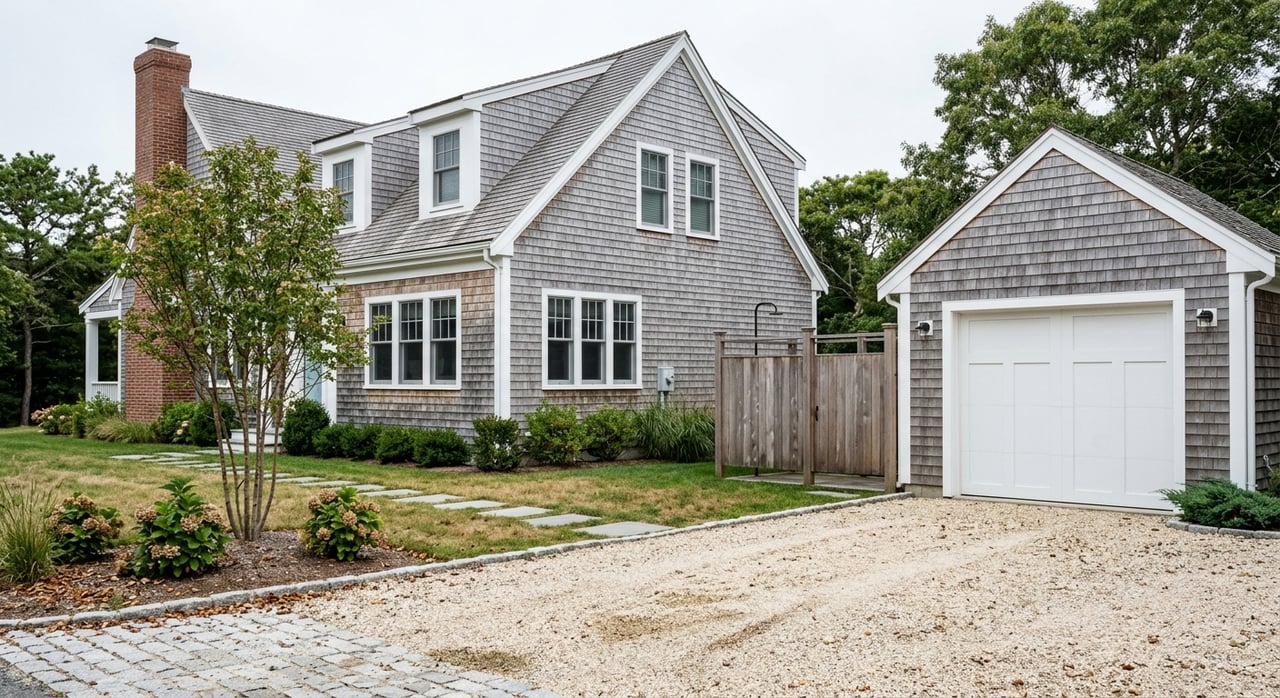
If you picture classic Cape housing, both towns generally fit that image. The Cape Cod Commission profiles show that 83% of residential properties in both Barnstable and Falmouth are single-family homes.
Barnstable has a slightly larger share of multifamily properties at 14% compared with 13% in Falmouth. It also has a slightly higher share of condos and apartments at 12% versus 10%.
That difference is small, but it can matter if you want alternatives to a detached home. Buyers looking for a condo, an easier lock-and-leave setup, or a broader housing mix may find a few more options in Barnstable.
Barnstable is the larger of the two towns in both population and household count. The town has just over 49,500 year-round residents and 21,413 households, while Falmouth has about 33,000 year-round residents and 14,890 households, according to the Cape Cod Commission profiles.
That larger year-round base tends to shape how Barnstable functions. It reads more like a central hub with a broader mix of services, daily activity, and housing choices across its seven villages.
Seasonality is one of the biggest practical differences between these towns. Barnstable has about one-fifth of all housing units used seasonally, while Falmouth has just under 30% used seasonally.
The employment patterns in the town profiles support that distinction. Falmouth’s employment peaks in July at 27% above the February low, while Barnstable’s summer rise is smaller at about 16% above the January low.
If you want a place that feels more active as a year-round community, Barnstable may line up better. If you are specifically looking for a coastal town with a stronger seasonal rhythm, Falmouth may feel more in sync with your goals.
Barnstable includes the villages of Barnstable, Centerville, Cotuit, Hyannis, Marstons Mills, Osterville, and West Barnstable. The town and regional sources note that it offers more transportation options than any other community on Cape Cod or the Islands, including Cape Cod Gateway Airport, CCRTA, CapeFLYER, the Steamship Authority, Hy-Line, and major bus services.
The Hyannis Transportation Center serves as the regional transit hub, and CapeFLYER seasonal rail service connects Boston and Hyannis through Labor Day. For buyers who expect regular mainland travel or want the strongest mix of bus, rail, and airport access, Barnstable has an edge.
Falmouth’s transportation setup points in a different direction. The town notes that CCRTA fixed routes serve Falmouth year-round, and the Steamship Authority runs year-round service from Woods Hole to Martha’s Vineyard, with the trip taking about 45 minutes.
That ferry connection is a major draw for some buyers. If your lifestyle includes Vineyard access, waterfront activity, or a home base tied closely to Woods Hole, Falmouth may be the more natural fit.
Falmouth is also home to the Shining Sea Bikeway, a 10.7-mile paved multi-use trail that runs from Woods Hole to North Falmouth through four villages. It is one of the town’s most recognizable recreation features.
That does not mean one town is better than the other. It means the experience is different. Barnstable feels more like a central service and transit hub, while Falmouth feels more shoreline-oriented, bike-friendly, and ferry-connected.
If you are torn between Barnstable and Falmouth, start with how you plan to use the home. A primary residence, a frequent weekend base, and a seasonal second home can each point toward different priorities.
Then look at your budget in real terms. The Cape Cod Commission reports that Barnstable’s 2024 median household income was $92,000 while the income needed to afford the median-priced home was $201,000. In Falmouth, median household income was $93,000 while the income needed to afford the median-priced home was $240,000. Those figures are a reminder that both markets are expensive, and Falmouth generally pushes affordability further.
It also helps to think beyond the median. In Barnstable, you may be able to compare more neighborhoods and price bands within one search. In Falmouth, you may pay more, but you could gain the specific coastal setting or ferry-linked convenience that makes the purchase worth it for your lifestyle.
Ultimately, neither town is a one-size-fits-all answer. Barnstable tends to win on flexibility, inventory, and transportation, while Falmouth tends to win on coastal atmosphere, seasonality, and premium lifestyle appeal.
If you are weighing Barnstable against Falmouth and want local guidance tailored to how you actually plan to live on the Cape, Team Franklin can help you compare the options with a clear, practical strategy.


Get assistance in determining current property value, crafting a competitive offer, writing and negotiating a contract, and much more. Contact us today.