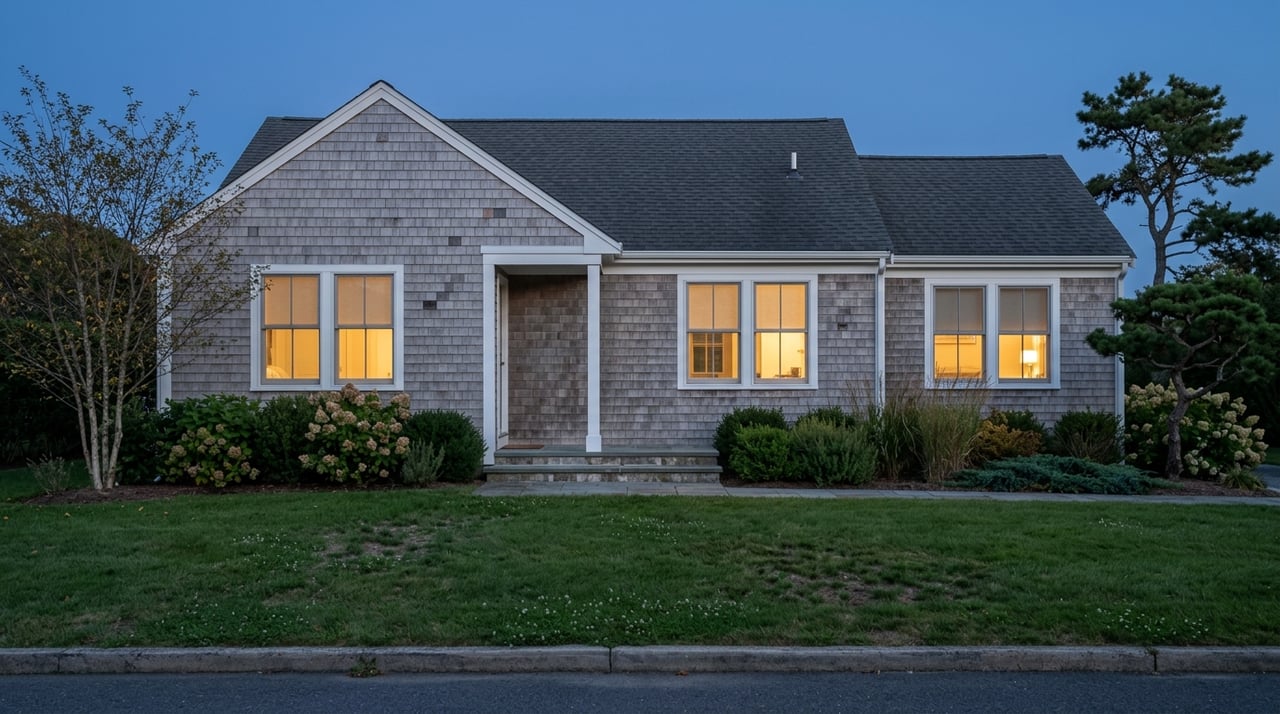
Understanding The Vacation Rental Market In Yarmouth
If you are thinking about buying a Cape Cod property to enjoy part of the year and rent part of the year, Yarmouth is probably already on your radar. It has a well-established vacation rental market, strong summer demand, and the kind of coastal appeal that draws repeat visitors. But the numbers only make sense when you look at them through a local lens, especially in South Yarmouth. Let’s dive in.
Yarmouth is not a small or experimental short-term rental market. Research sources place active inventory in a fairly similar range, with AirROI estimating 567 active listings townwide and AirDNA showing 523 listings in South Yarmouth alone.
That matters because it tells you two things right away. First, this is a competitive market with established guest demand. Second, performance can vary a lot by property type, location, and season, so it is better to think in ranges than expect one exact number to fit every home.
If you are evaluating South Yarmouth specifically, the market is heavily oriented toward entire-home rentals. AirROI reports that 92.9% of active Yarmouth listings are entire homes, and AirDNA shows 92% entire-home supply in South Yarmouth.
For many second-home buyers, that is an important signal. It suggests the local rental market is built around standalone homes rather than a large mix of private rooms or small shared accommodations, which can be more in line with how many Cape buyers want to use and position a property.
The topline numbers for Yarmouth and South Yarmouth are encouraging, but they are not identical. AirROI’s 2026 Yarmouth report estimates average annual revenue of $35,005, 41.3% occupancy, a $400 average daily rate, and $186 RevPAR. AirDNA’s South Yarmouth data is a bit stronger, showing about $27,000 in annual revenue, 54% occupancy, a $426.2 ADR, and $215.1 RevPAR.
The best way to read those figures is as a range. Townwide Yarmouth data captures a broader mix of homes and locations, while South Yarmouth data reflects a more specific submarket. A larger home near the water or close to local attractions may perform very differently from a smaller property in a less seasonal pocket.
Many Cape Cod buyers think in weekly terms, especially for peak summer use. Based on the research, a simple seven-night equivalent comes to about $2,534 per week at a $362 ADR, about $2,800 per week at a $400 ADR, and about $2,983 per week at a $426.2 ADR.
Those figures are before cleaning fees and taxes. They are useful for rough planning, but they should not be treated as your net income or even your exact booking rate. They are best used as a starting point for a realistic projection.
One of the biggest mistakes buyers make is assuming vacation rental income will be evenly spread across the year. In Yarmouth, the data points clearly to a summer-heavy market. AirROI identifies July as the peak revenue month and March as the softest month, and the town’s housing study also found that app-based rentals charge more in July and August.
That seasonality should shape your expectations from the start. If you are underwriting a purchase in South Yarmouth, it is smarter to assume strong summer income and a meaningful off-season slowdown rather than steady year-round performance.
AirROI reports an average stay of about 5.6 nights and a booking lead time of roughly 70 days. That gives you a helpful picture of how guests tend to book in this market.
In practical terms, many reservations are not locked in a year ahead. Owners often rely on a strong booking window heading into the peak season, which makes pricing strategy, property presentation, and calendar management especially important.
Not every home in South Yarmouth will perform the same way, even within the same ZIP code. Research points to Yarmouth Port, West Yarmouth, and South Yarmouth as strong areas to watch, with South Yarmouth standing out for access to beaches, restaurants, golf, Smuggler’s Beach, Bass River, and the Cultural Center of Cape Cod.
For buyers, that reinforces an important point. Location still matters, but so does fit. A whole-home property with the right bedroom count, parking, and layout may align better with typical guest demand than a home that looks appealing on paper but is harder to use as a seasonal rental.
For broader Cape Cod context, the UMass Donahue study found that 3-bedroom short-term rentals were the most common size across the Cape. It also found that the median ADR for a 3-bedroom Cape Cod STR was $414 in 2022 year-to-date, up from $403 in 2021.
That does not mean every buyer should target a 3-bedroom home. It does mean bedroom count is a meaningful part of the rental equation on Cape Cod, especially when paired with legal occupancy limits and septic capacity.
If you are considering a purchase with short-term rental use in mind, Yarmouth’s local rules deserve close attention. The town’s short-term rental bylaw, effective April 30, 2024, allows STRs by right in several zoning districts if Section 418 criteria are met.
The bylaw defines short-term rentals as advance-reserved stays of 1 to 31 consecutive days. It also requires annual registration through the Health Department, occupancy limits based on inspections and septic capacity, a prominently displayed rental certificate with 24-hour local contact information, at least one parking space per bedroom, and a minimum stay of two consecutive nights.
The current bylaw also bans large events, tents, RVs or campers, and month-to-month short-term rental use. It excludes income-restricted dwellings, accessory apartments, and units with outstanding code violations.
There is another key detail to keep in mind. The current bylaw is scheduled to sunset on November 30, 2026, unless it is extended or replaced. For a buyer, that means policy is not frozen, and local updates should be part of your due diligence.
Yarmouth’s 2026 registration materials add more detail that buyers should not ignore. Short-term rentals must be registered no later than April 1, 2026, require yearly inspections, and cost $180 annually. Rental certificates expire on December 31 each year.
This is not a major expense compared with a home purchase, but it is part of the operating picture. More importantly, the inspection process ties occupancy limits to septic system capacity and the number of legal bedrooms, which can directly affect how you market and use the property.
A common budgeting mistake is to focus on gross booking revenue and overlook occupancy taxes. In Yarmouth, the local rooms tax is 6%. Short-term rentals in Barnstable County are also subject to the 5.7% state room occupancy excise and the 2.75% Cape Cod and Islands Water Protection Fund excise.
Together, that creates a combined 14.45% tax burden on taxable rent. If you are estimating income, that number should be built into your planning from day one.
The most useful takeaway is simple. Yarmouth can work well as a vacation rental asset, but the strongest projections tend to come from realistic assumptions, not best-case scenarios.
When you evaluate a South Yarmouth property, it helps to focus on these factors:
If you keep those variables in view, you can make cleaner comparisons between homes and avoid stretching the numbers.
South Yarmouth continues to attract attention because it offers a mix of coastal convenience and established visitor appeal. The research specifically points to beaches, dining, golf, Bass River, Smuggler’s Beach, and the Cultural Center of Cape Cod as part of the area’s draw.
For a second-home buyer, that mix can support both personal enjoyment and seasonal rental demand. The key is to choose a property that fits how you want to use it and how the local market actually books, not just how you hope it will perform.
If you are exploring South Yarmouth or anywhere on Cape Cod with vacation rental potential in mind, local guidance can make a big difference. Team Franklin helps buyers think through lifestyle fit, market context, and the practical details that shape a smart purchase.
Get assistance in determining current property value, crafting a competitive offer, writing and negotiating a contract, and much more. Contact us today.